
The Mistake Almost Everyone Makes
Power goes out ahead of an afternoon storm, the car is trapped in the garage, and the red handle hanging from the opener rail looks like the obvious fix. So homeowners grab it and pull while the door is still up, expecting it to ease down the way it does when the opener is running. It doesn't. Without the motor controlling the descent, the door drops as fast as gravity and worn springs allow — sometimes slowly, sometimes in a hard, sudden fall.
It's a tempting move because the cord is right there, it's clearly marked for emergencies, and in the moment it seems like the only way to get a car out before a storm hits. The problem is that most people have never actually tested it before they need it, so they're learning how their specific door behaves at the worst possible time.
What the Cord Is Actually For
The emergency release disconnects the trolley from the opener's drive carriage. That's it. It doesn't control the springs, the cables, or the weight of the door — it just lets you move the door by hand instead of by motor. It exists so that if the power is out (common during hurricane-season outages here) or the opener fails, you're not locked in or out of your own garage.
It's designed to be used safely in one specific situation: the door is already closed, and you need to lift it manually. Pulled under those conditions, a properly balanced door should lift with moderate, even effort because the torsion or extension springs are still doing their job of counterbalancing the weight.
What Goes Wrong — and How Badly
A standard double garage door typically weighs somewhere in the 130–250 lb range, with wind-load-rated doors (standard for this part of Florida) often running heavier because of reinforced panels. That entire weight is normally held in check by springs under serious tension. When you pull the release cord with the door open, you're asking those springs to hold the door in place without any motor assist.
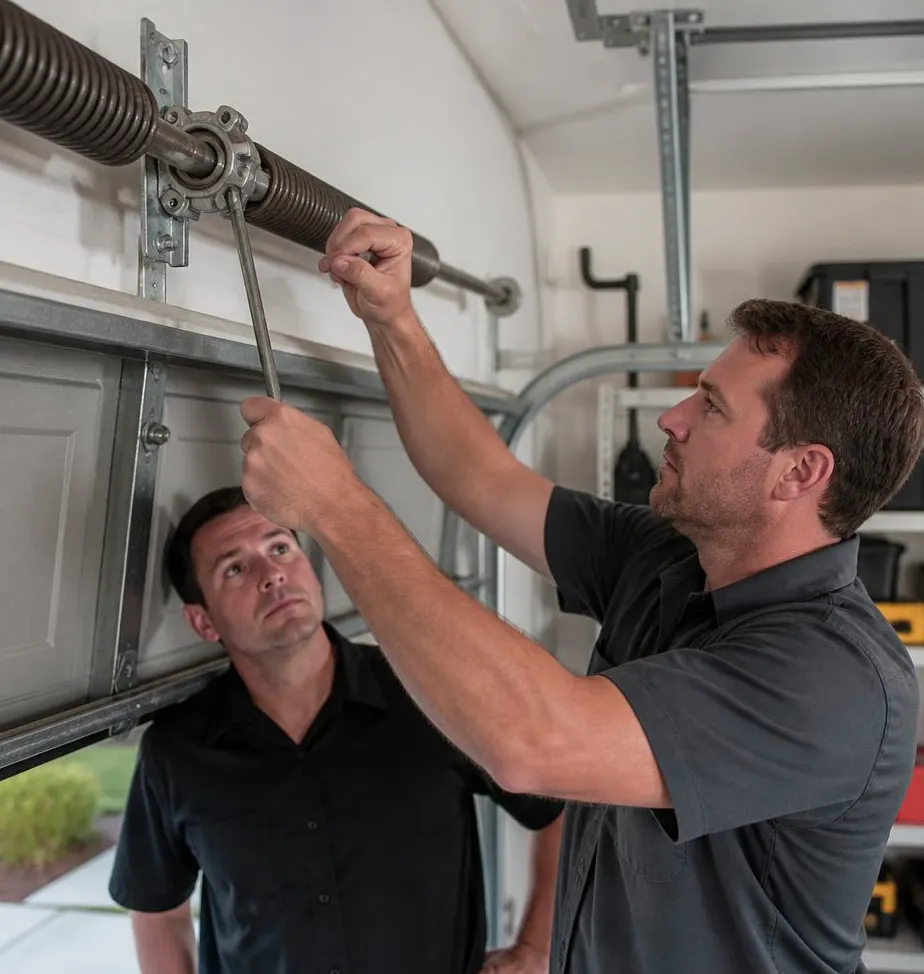
If the springs are in good shape, the door may stay roughly where it is or drift down slowly. But if a spring is already weakened — from age, cycle fatigue, or the rust and corrosion that salt air and humidity cause on coil surfaces along the coastal communities like Anna Maria and Holmes Beach — the door can drop without warning. That's enough force to damage the track, bend panels, snap cables, or injure anyone standing underneath, including kids or pets who don't see it coming.
There's a second risk specific to storm season: pulling the release during active wind can let gusts catch a partially open or moving door, adding load it isn't braced for.
How to Prevent Problems
- Only disengage the cord when the door is fully closed. That's the one position where manual operation is predictable and safe.
- Test it once during calm weather, not for the first time during a storm emergency. You want to know how your door behaves before you're relying on it.
- Check spring condition seasonally. Humidity and salt air speed up corrosion on coils and hardware; look for rust flaking, gaps in the coils, or a door that feels heavier than usual when lifted by hand.
- Reconnect the trolley correctly. Pull the cord toward the door (not straight down) until you hear the carriage click back into the track, then run the opener briefly to confirm it catches before trusting it with your car.
- Keep the cord at a safe, deliberate length. It shouldn't hang low enough for small children to grab accidentally, but it needs to stay reachable for actual emergencies.
- After any manual operation, check balance. Lift the door halfway by hand and let go — it should stay roughly in place. If it drops or shoots up, the springs are off and need attention before you use the release cord again.
When to Call Bradenton Garage Door Experts
If your door drops fast or feels unusually heavy when disengaged, that's a spring problem, not something to keep working around manually. We handle spring replacement with coils rated for the cycle counts and conditions common in Manatee County, including coastal corrosion exposure. If the trolley won't reconnect cleanly or the opener doesn't respond after reattachment, that's often an opener repair issue rather than the cord itself. Either way, it's worth having it checked before the next outage, not during one.
If you're in Bradenton, Sarasota, Palmetto, Lakewood Ranch, Ellenton, Parrish, or the islands and your release cord isn't behaving the way it should, call Bradenton Garage Door Experts for a straightforward inspection and repair before storm season puts it to the test.